The 24 Runes of the Elder Futhark and Their Meaning
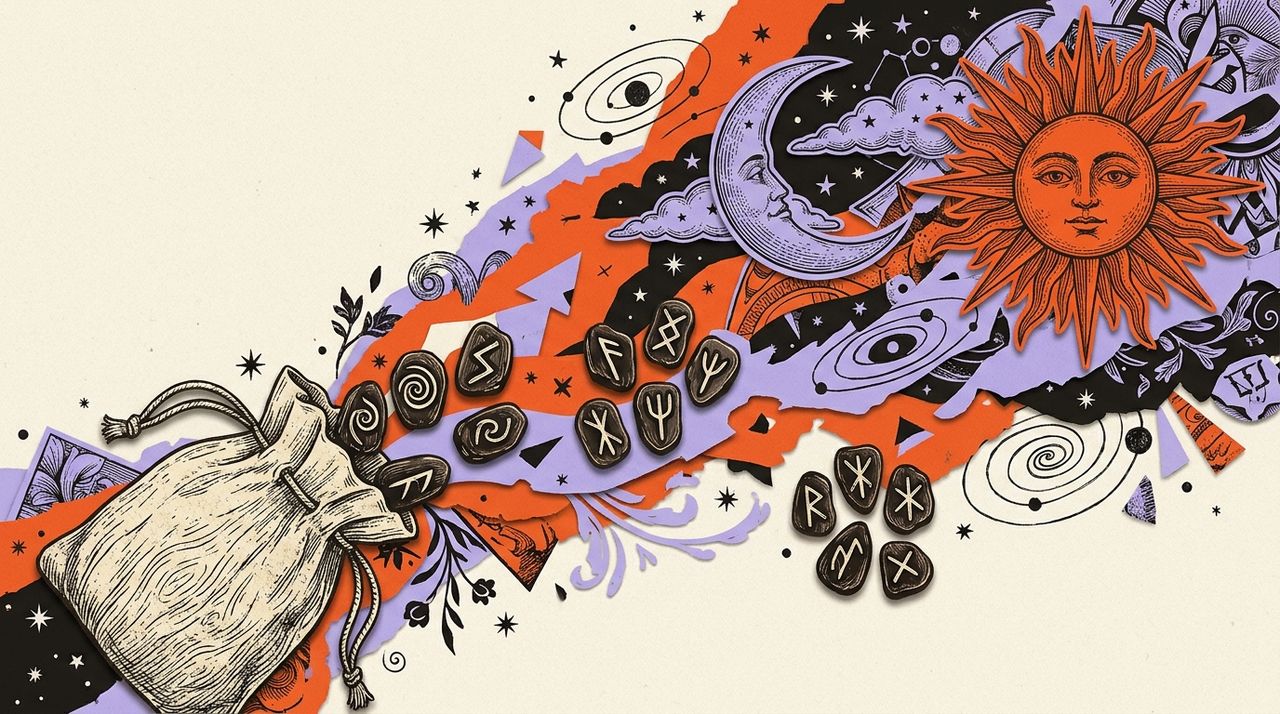
Runes are the signs of an alphabet used by Germanic and Scandinavian peoples. Carved into stone, wood or metal, they also serve today as a basis for a divinatory practice. Here is the history of the Elder Futhark, the list of its 24 signs and how they are used now.
An alphabet before an oracle
The Elder Futhark is the oldest form of runic writing. It is attested roughly between the 2nd and 8th centuries AD, on objects, jewellery and standing stones. Its name comes from its first six letters: f, u, th, a, r, k. There are 24 signs, each corresponding to a sound and bearing a name that evokes a concrete thing, such as cattle, ice or the sun.
The ancient inscriptions are short: names, formulas, owners' marks. What is known about their magical or religious use remains uncertain. The Roman historian Tacitus describes, around the year 98, a practice of divination with marked rods among the Germanic peoples, but nothing establishes that these were runes. Runic divination as we know it today is mostly a 20th-century construction.
The three aetts
The 24 runes are divided into three groups of eight, called aetts. The names below are linguistic reconstructions, and several meanings remain debated.
| Aett | Rune | Meaning of the name |
|---|---|---|
| 1st | Fehu | cattle, wealth |
| Uruz | aurochs, strength | |
| Thurisaz | giant, thorn | |
| Ansuz | god, speech | |
| Raidho | journey, riding | |
| Kenaz | torch | |
| Gebo | gift | |
| Wunjo | joy | |
| 2nd | Hagalaz | hail |
| Nauthiz | need, constraint | |
| Isa | ice | |
| Jera | year, harvest | |
| Eihwaz | yew | |
| Perthro | uncertain meaning | |
| Algiz | protection, impetus | |
| Sowilo | sun | |
| 3rd | Tiwaz | the god Tyr |
| Berkano | birch | |
| Ehwaz | horse | |
| Mannaz | human being | |
| Laguz | water | |
| Ingwaz | the god Ing | |
| Dagaz | day | |
| Othala | heritage, estate |
How runes are drawn
Runes usually come as small stones, or tokens of wood or ceramic, kept in a pouch. The person consulting concentrates on a question, then draws one or more signs without looking. The common spreads are:
- One rune: an insight into the day or the situation.
- Three runes: read as past, present and possible outcome.
- A wider spread: several runes laid out in a pattern, each position representing an aspect.
Some runes may appear upside down, which sometimes changes the reading depending on the author. Here again, there is no single rule: each book offers its own grid of meanings, and the reading depends largely on personal interpretation.
Uses today
Runes interest several groups: enthusiasts of Norse history, followers of spirituality, the curious about symbols. Some use them as a meditation tool, taking one sign as a theme for reflection. Others consult them as an oracle, in the manner of cards. Serious readers readily distinguish what belongs to history (the inscriptions, the language) from what belongs to modern practice, often inspired by contemporary readings.
To place this practice, you will find the Runes page. If you prefer a medium based on images, the free tarot reading offers a similar approach, with cards rather than carved signs.
Runes do not predict anything in any proven way. They are a matter of belief and entertainment, and do not replace medical, legal or financial advice.